
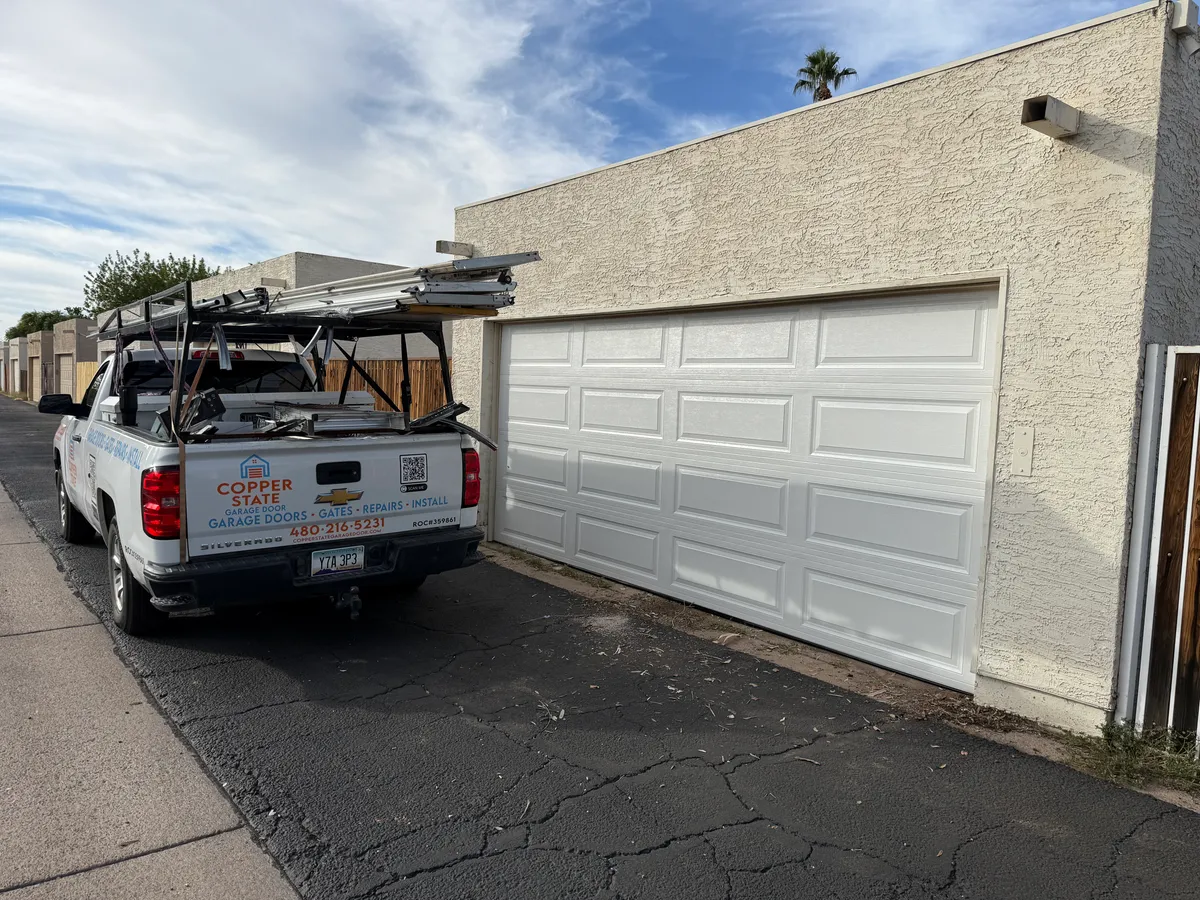
Garage door cables are the unsung component of every overhead garage door. They do not get much attention until one of them fails — and then they get a lot of attention very quickly. A snapped cable usually leaves the door tilted in the opening, jammed against one track, or sitting at an angle that makes it look like the whole door is about to come down. Here is what cables actually do, why they fail, and what to expect when one needs to be replaced.
What Garage Door Cables Do
Every standard residential garage door has two lift cables — one on each side. They run from a bracket at the bottom corner of the door up to a drum that sits on the same shaft as the torsion springs above the door. As the springs unwind to lift the door, the drums rotate and wind up the cable, pulling the door upward.
If you have extension springs (the kind that run along the horizontal tracks) instead of torsion springs, your cables work a little differently — they run through pulleys and connect the spring to an anchor at the back of the track. The principle is the same: cables convert spring force into door lift.
Cables stay under significant tension whenever the door is closed. That tension is what makes them dangerous to work on without training.
Why Cables Fail
Fraying from wear. Every open-and-close cycle puts the cable through a wind-and-unwind pattern at the drum. Over thousands of cycles, individual strands begin to fray, especially at the drum end where bending stress is highest. A frayed cable looks “fuzzy” — broken strands stick out from the main bundle.
Rust. Cables are galvanized to resist rust, but the coating can wear through over the years. Once rust starts on a cable, the strength drops quickly. Cables exposed to irrigation overspray or monsoon moisture rust faster than dry-garage cables.
Improper drum winding. If the cable does not sit cleanly in its drum groove, it can pile up on itself or jump out of the groove entirely. This typically traces back to an installation error or a previous spring replacement that did not get the cable tension and winding right.
Cable length mismatch. Cables come in specific lengths matched to door height. A cable that is too long or too short for the door winds incorrectly on the drum and fails prematurely.
Sudden shock load. When a torsion spring breaks, the sudden change in load can damage the cables on the same door. We frequently replace cables alongside springs for this reason.
Signs Your Cable Is About to Snap
A cable rarely fails without warning. Catching the early signs gets you a cheaper, less dramatic repair.
Visible fraying. Inspect both cables along their full length when the door is fully open. Broken strands or “fuzz” anywhere on the cable means it needs replacement now, not later.
The door sits crooked when closed. If one cable is starting to slip on its drum or has stretched unevenly, one side of the door will sit lower than the other when fully closed. The gap at the bottom seal will be bigger on one side.
The door catches or grinds during travel. A cable that has slipped out of its groove on the drum will cause the door to bind, jerk, or rub against one track during operation.
Cable hanging loose. If you see slack in a cable on a closed door, something is wrong. Cables should be taut whenever the door is in any position.
If the door tilts hard to one side, will not open, or you hear a sharp pop followed by the door dropping a few inches, the cable has snapped. Stop using the door and call a professional.
Why This Is Not a DIY Repair
We get asked about DIY cable replacement more than nearly any other repair. The honest answer: do not do it. Garage door cables are under spring tension. Releasing that tension safely requires winding bars, a way to lock the spring shaft, and the experience to know when you have made a mistake.
The same cautions that apply to broken springs apply to cables. A cable that snaps under tension whips with enough force to break bones. A cable that comes off a drum during a DIY replacement can drop a 200-pound door on whatever is underneath it.
The only cable-related task we recommend DIY is inspection. Look. Do not touch.
What a Professional Replacement Involves
A technician will start by securing the door in the up position with locking pliers on each track to prevent it from falling if anything goes wrong. The springs are unwound to release tension. With the springs neutral, the old cables are removed, new cables of the correct length are installed and routed through the drums, and the springs are rewound.
The technician will inspect the drums while they have access — drums with worn grooves can chew up new cables and need to be replaced together. Cables and drums work as a system.
After installation, the technician balance-tests the door and adjusts spring tension to compensate for any change in weight or behavior. The whole job typically takes 60 to 90 minutes.
What It Costs
Cable replacement in the Phoenix Valley typically runs $150 to $300, depending on whether one or both cables are replaced and whether drums need to be replaced at the same time. We always replace cables in pairs — they are the same age and the second one will fail soon after the first. The marginal cost of the second cable is small compared to a second service call.
If your door is showing any of the warning signs above, contact us and we will come take a look. Same-day service is available across the East Valley. See our garage door repair page for what is included with a service call.