
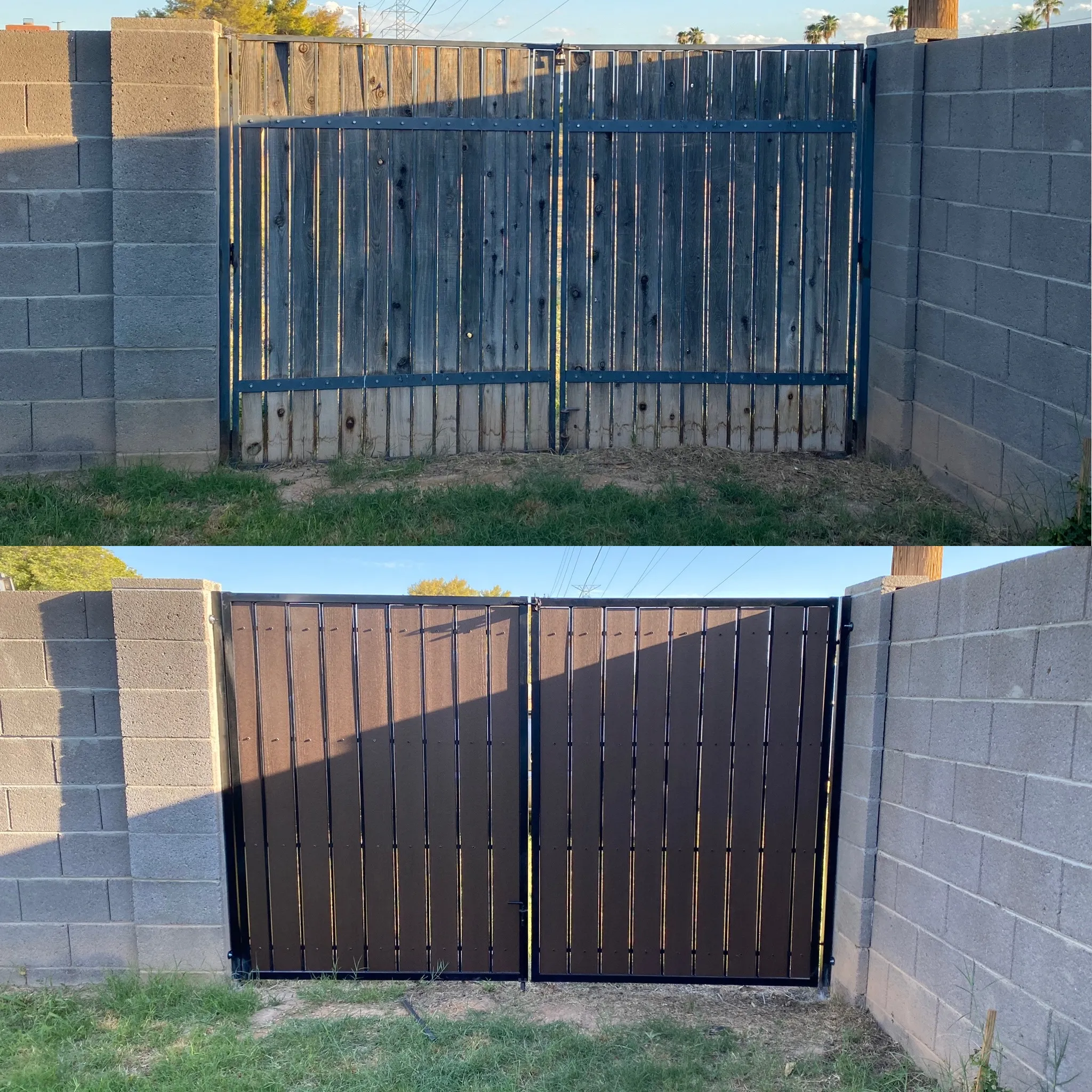
A misaligned gate is more than an inconvenience. Left unchecked, it puts stress on the motor, damages the track or hinges, and can become a security risk. In Arizona, where the ground shifts with moisture changes and the sun warps metal all summer, gate misalignment is one of the most common service calls we get.
What Causes Gate Misalignment
Ground settling and shifting. Arizona’s soil — especially the clay-heavy caliche common in the East Valley — expands when it gets wet and contracts when it dries. That seasonal movement can shift fence posts and gate columns enough to throw a gate out of alignment. New construction is particularly susceptible in the first two to three years as the ground settles.
Hinge wear. Every time your gate opens and closes, the hinges bear the full weight of the panel. Over thousands of cycles, hinges wear down, loosen, or bend. Heavier gates — wrought iron and steel especially — accelerate this wear.
Post damage. A gate is only as straight as the posts holding it. Vehicle impacts, root growth from nearby trees, or erosion around the base can shift a post enough to misalign the gate. Even a half-inch of post movement creates a noticeable problem at the latch side.
Thermal expansion. Metal gates expand in Arizona’s summer heat and contract in winter. A gate that swings freely in January may drag or bind in July. This is normal to a degree, but if the installation did not account for thermal movement, the problem compounds over time.
Motor or operator issues. For automated gates, a failing motor, worn drive gear, or misadjusted limit switches can cause the gate to stop short, overtravel, or sit unevenly when closed. This looks like misalignment but the root cause is mechanical.
How to Spot Misalignment Early
Catching misalignment early saves money. The longer a gate operates out of alignment, the more damage it does to surrounding components. Watch for these signs:
The gate drags on the ground or the track at any point during its travel. You hear scraping, grinding, or unusual resistance when the gate moves. The gate does not latch properly or leaves a visible gap when closed. The gate hesitates, jerks, or reverses mid-travel on an automatic opener. The gap between the gate and the post is uneven — wider at the top than the bottom or vice versa.
When You Can Fix It Yourself
Minor hinge adjustments on a manual swing gate are reasonable for a handy homeowner. If the hinges are bolt-on style, you can loosen them, shim the gate back into position, and retighten. Check that the post is still plumb with a level first — if the post has shifted, adjusting the hinges is a temporary fix at best.
For sliding gates on a track, check the track for debris, dirt buildup, or damage. A bent section of track is a common cause of binding. Cleaning the track and rollers can resolve minor issues.
When to Call a Professional
Call a pro if the post has shifted, the gate is automated, the hinges are welded, or the gate weighs more than you can safely support while making adjustments. Automated gate systems involve electrical components, safety sensors, and moving parts under significant force — working on them without experience risks injury and can void warranties.
If the misalignment is caused by ground movement, a technician may need to reset the post in concrete, adjust the track grade, or modify the gate panel to account for the new position. For automated gate systems, the operator limits and safety sensors will need recalibration after any physical adjustment.
Preventing Future Misalignment
Proper installation is the best prevention. Posts should be set in concrete to a depth appropriate for the soil conditions — typically 24 to 36 inches in Arizona soil. Gates should be hung with clearance for thermal expansion. Automated systems should be installed with adjustable mounting hardware that allows for fine-tuning over time.
After installation, a yearly inspection catches problems before they become expensive. Tighten hardware, lubricate hinges and rollers, check post plumb, and test the opener’s safety features.
If your gate is not sitting right, get in touch and we will come take a look. We service swing gates, sliding gates, and automated systems across the Valley.